
Worship Times
Sundays at 8am and 10:30am
Services at Historic St. Paul’s Church the first Sunday of every month at 5pm
Stay In Touch.
Get updates from our parish including calendar, service information and other text.

Authoritatively cultivate sustainable imperatives without transparent internal or "organic" sources. Professionally formulate long-term high-impact e-markets and scalable initiatives. Intrinsicly synergize excellent solutions after standards.
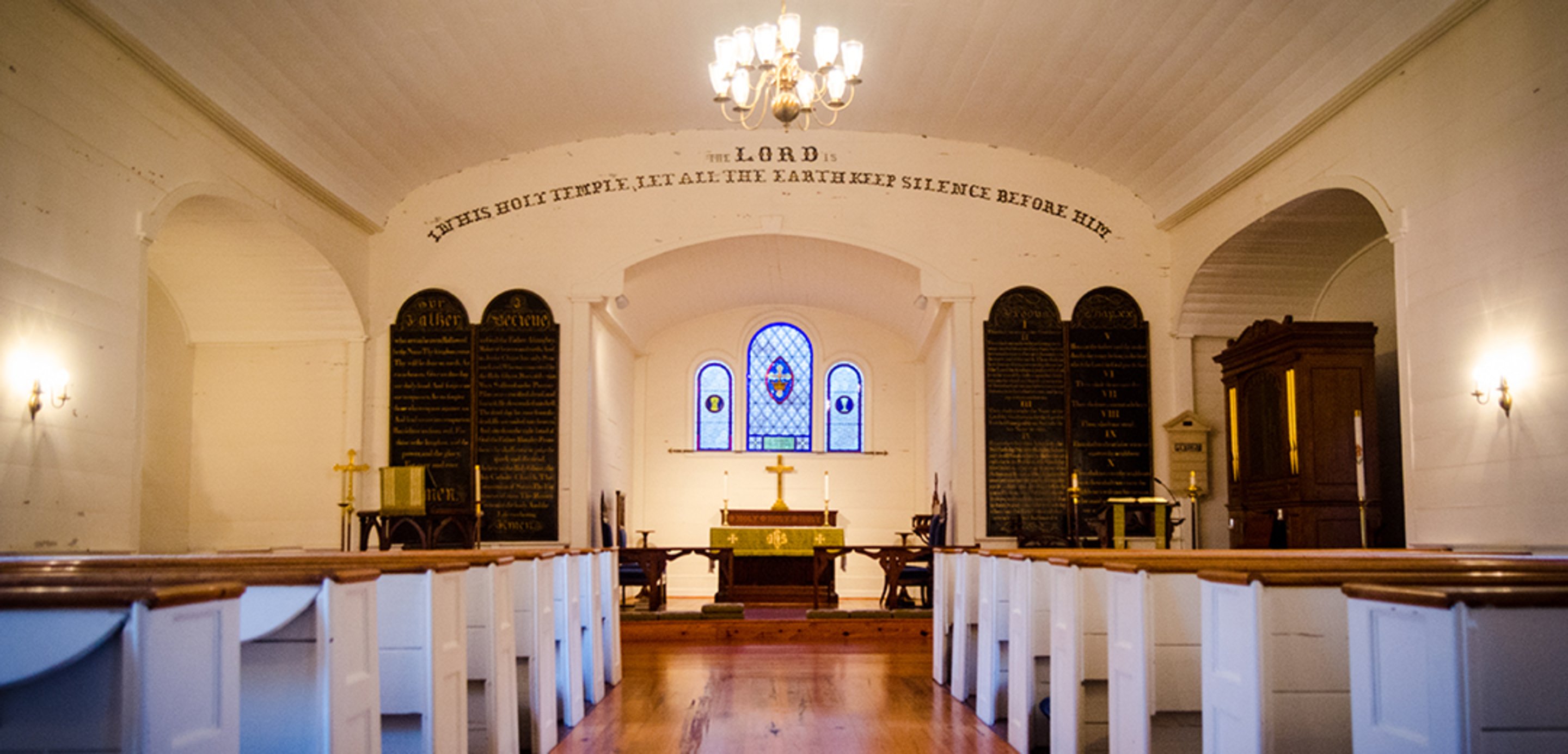
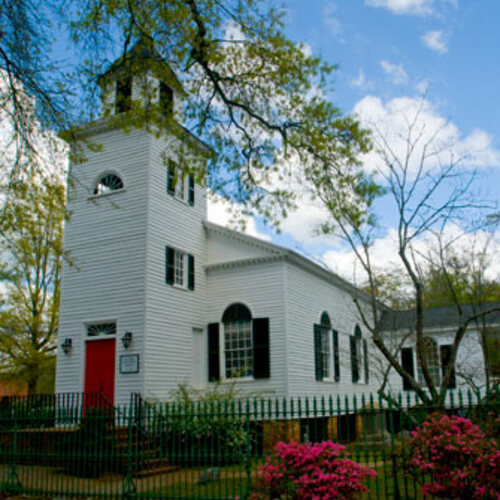
Established on June 17, 1819, St. Paul’s Episcopal Church of Pendleton is the “mother church” of Holy Trinity, having long been a part of the local ministry of the Episcopal Church in the upper part of South Carolina, and is an important and tangible piece of the Holy Trinity story. No longer an active parish, St. Paul’s building and churchyard are under the custodianship of Holy Trinity, which over the years has marshaled numerous renovation and maintenance projects to maintain the integrity of the church building and grounds. Currently, a significant project is underway. Contributions for this project can be made here. The campus also houses St. Paul’s Thrift Shop, which for over 50 years has provided inexpensive goods to the community and has donated proceeds to local charities.
Holy Trinity provides regular services at St. Paul’s on the first Sunday of each month at 5:00 pm (Holy Eucharist Rite One). Twice each year a traditional Evensong service is held, featuring the Holy Trinity choir. Holy Trinity also celebrates Pentecost Sunday and one of the Parish’s Christmas Eve services at St. Paul’s. The building is also occasionally used for weddings, funerals and other special services.
St. Paul’s was built on a small portion of the traditional and ancestral land of the Cherokee People. The church was funded by the wealth created by the unpaid, forced labor of those enslaved by many of the founders of this parish who are buried in our church yard. As followers of Christ, we are called to acknowledge the sins of racism and slavery that are part of the complex history of our beloved Mother Church. In the name of Christ we seek God’s forgiveness and reconciliation with the descendants of those displaced and enslaved in the early years of our community’s history.
1789 - Old Stone Church founded by Presbyterians
1790 - Town of Pendleton founded
1815 - Episcopal Mission organized and worship held in Pendleton Court House and Farmers Hall
1819 - St. Paul’s mission established
1820 - Subscriptions taken for Church. Land for Church purchased from Pendleton Circulating Library
1822 - St. Paul’s building completed and opened for worship
1823 - Building consecrated. Bell Tower added later, with the original bell removed and given to the Confederacy to make ballistics during the Civil War
1848 - Jardine Organ purchased and placed in the Church where it remains and is still used
1854 - Rectory purchased (unknown location)
1860 - Churchyard enlarged with the purchase of 1.5 acres of land
1890 - Churchyard front fenced
When pioneers moved into the Cherokee Territory after the American Revolution, they brought their religion with them. One of the first, General Andrew Pickens, brought Presbyterianism into the Pickens County District, comprised of the present Pickens, Oconee, and Anderson Counties, resulting in the founding of Old Stone Church, located near the current Clemson University Campus, in 1789. This was roughly around the time of the founding of the town of Pendleton (1790) and its selection as the seat of local government in northwestern South Carolina.
Although the prevailing denominations in the Upstate were Baptist, Methodist, and Presbyterian, an influx of Charleston residents, many of whom were Episcopalians seeking a more healthful climate and escape from the low country heat of summer, built plantation homes in the country around Pendleton. The Protestant Episcopal Society for the Advancement of Christianity in South Carolina was active in organizing these arrivals, although progress in this regard was slow.
In Bishop Theodore Dehon’s report to the 26th Diocesan Convention (1814), he wrote:
It is with pleasure I mention that the congregation of Episcopalians in Columbia collaborated and organized, under the labors of a Missionary of the Protestant Episcopal Society, have, with the aid of donations for the work, from many zealous and benevolent individuals, of our community, finished arrangements for the erection, in that place, of a building for the purpose of Christian worship, according to the uses of our Church. This success of exertions in a place, where three years ago, the Liturgy of our Church was scarcely known, affords encouragement to similar efforts in other places, notwithstanding the unpropitious circumstances, which confessedly exist.
Despite the Bishop’s earlier concerns, the following year at Convention the Hon. Theodore Gaillard, a deputy from Trinity Church, Columbia, moved for a resolution, commending the work of the Advancement Society and appealing for its support so that it might extend its work into the upper part of the state, “particularly in the Pendleton District.” A group of Episcopalians, organized into a mission, worshipped in the Court House and the present-day Farmers Hall, there being no church building yet in Pendleton.
At the 1822 convention, Bishop Nathaniel Bowen reported visiting for the first time “through the North Western extremity of the state” and administering the rite of confirmation in Pendleton. Efforts, however, were already under way toward the erection of a church. In 1820 subscriptions were taken, Bishop Bowen leading the list with $100. Mr. Benjamin Dupre, Col. John E. Calhoun, and Col. James Grishaw, comprising a committee, procured a lot from the Pendleton Circulating Library for $39.00.
Despite abundant supplies of native timber, lumber for the building was hauled in ox carts from Savannah, Georgia. The original structure was completed in the fall of 1822 and consecrated by Bishop Bowen in 1823. The belltower was added later and contained a bell from the ship, Seabrook, which sailed many years prior from Charleston to Edisto Island. The original bell was given for its metal to the cause of the Confederacy during the Civil War. Part of the building is the winding stairway, which opens off the vestibule and leads to the gallery, an area to which slaves were restricted. The original slave entrance to the building was a small ancillary door accessible by ladder on the south side of the vestibule. This door is now sealed but is still visible from the outside.
In 1829 there were only three pews, a paucity which may be accounted for in the by-laws of St. Paul’s. For example, congregants who wanted a pew had to pay assessments every six months, a regulation that might have been a financial deterrent for many. In 1833, five pews were added, as well as a vestry room.
The present organ was purchased in 1848 by popular subscription for a total of $300.00. Prior to the installation, Dr. Thomas Dart “raised the tunes.” Mrs. John C. Calhoun was active in raising the funds because she complained that Dr. Dart “failed to carry the tune” and because of the “hissing sound he made.” In 1854 a rectory near the church was acquired at a cost of $1,100, possibly reflecting the new prosperity resulting from the building of the Blue Ridge Railroad in 1853. In 1860, the Churchyard was enlarged with a one and one-half acre purchase and was fenced in front in 1890.
In the Churchyard lie many of South Carolina’s most celebrated men and women. Among them are Floride Bonneau Calhoun, a lifelong member of St. Paul’s and John C. Calhoun’s wife (John C. Calhoun is buried at St. Philip’s in Charleston); General Barnard E. Bee, who gave the name “Stonewall” to Gen. Thomas Jonathan Jackson; William Henry Trescot, historian and U. S. diplomat; the Rev. Jasper Adams, first president of then Hobart College in New York; the Rev. Paul Earle Sloan, St. Paul’s only postulant for Holy Orders; and Thomas G. Clemson and his wife, Anna Maria Calhoun Clemson. Every year at St. Paul’s, Clemson University commemorates its founder Thomas Green Clemson, who died on April 6, 1888, with a Founder’s Day ceremony that includes a prayer service.
Interments have continued through the years and have included many parishioners of Holy Trinity. In addition to the marked and identified graves, many burial sites of slaves and indentured servants are marked by uninscribed stones along the east fence, or remained unmarked. Recently, Dr. Spencer Roberts of Clemson University has led a group of students in the restoration of gravestones and has used Global Positioning Systems combined with advanced imaging technology to create a high resolution digital map of the Churchyard.
Historic St. Paul's is located at 328 E. Queen St. Pendleton, SC 29670
St. Paul's mailing address is:
C/O Holy Trinity Episcopal Church
193 Old Greenville Highway
Clemson, SC 29631